Gurdwara Tapoban SahibBrampton

ਪ੍ਰਥਮਰਹਿਤਯਹਿਜਾਨਖੰਡੇਕੀਪਾਹੁਲਛਕੇ॥ ਸੋਈਸਿੰਘਪ੍ਰਧਾਨਅਵਰਨਪਾਹੁਲਜੋਲਏ॥

Forum

CHAND-TORA?

CHAND-TORA?

MEEEEEEE · 30 Sep 2004

does any know thhe history of the Chand-tora?...i wear one sometimes but i have heard its not a real Khanda, and that it has something to do with the moon...and we don't believe in any mythological stories etc...any info would be greatly appreciated...

Re: CHAND-TORA?

Gursikha(n) kee har dhooR deh · 01 Oct 2004

weird... i was JUST talking to a singh about this... and he said that other people have told him it's not really 'acceptable' as opposed to a khanda

Re: CHAND-TORA?

. · 01 Oct 2004

I once heard that the chand was at first an attempt to make a Khanda but just a really simplified one. I initially didn't think this was right, but on reflection it does make sense. It does seem an awful lot like a simplified khanda. Another possible explanation is the degh/tegh symbolism. I'm not sure if it's correct, but it does look like a khanda and a degha. Finally is the "age of the moon" explanation which I've heard mentioned but never explained. At any rate, I don't at all think it would be wrong to wear it. Bhai Sahib Randheer Singh jee wore something very simmilar to a chand for many years before switching to the the khanda in his later life.

Re: CHAND-TORA?

Singh · 01 Oct 2004

I personally don't feel the chand-tora is a true Khanda, in fact I think it has got confused somewhere down the line with Islamic symbolism. In the beginning of the British Raj after the fall of Maharaja Ranjit Singhs empire, the British created a muslim army regiment who all wore the chand sign on their turbans. Furthermore the chand is used by the Muslims on their flags and mosques.

Re: CHAND-TORA?

Amandeep · 01 Oct 2004

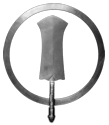
Chand Tora is the Add-Chand symbol and the twisted wire that binds it to the Dumalla (Tora). The Add-Chand symbol is an ancient one that pre-dates Sikhism and is not a simplified Khanda. The Sikh Khanda is a relatively recent innovation dating from around the 1920s. The Add-Chand is made up of two componenets, the Chand is the Cresecnet moon, and symbol of female fertility, whilst the central piece is a shivling (phallus) and potent representation of Shiva. Note that below the shivling are two balls rather than the hilt of a khanda as there are in the Sikh symbol. The Add-Chandd is an ancient symbol, which has transformed into many others - the Trishul is a form of the Add-Chand. in early paintings and written accounts of the sikhs, the add-chand is sometimes present in one form or another. The Khanda is altogether more modern, I have never seen any representation prior to about the late 1920s. Like the Islamic Chand-Sitara (which dates to about 1400) it was created long after the faith was formed. Aman

Re: CHAND-TORA?

??? · 01 Oct 2004

Could some really tell us about it

Re: CHAND-TORA?

:- · 01 Oct 2004

If what veer Amandeep Singh is saying is true then why do Singhs wear the Add-Chand, and when the Khanda was created why did Singh Still wear the Add-Chand when the Khanda has been around for many years even in guru jees time.

Re: CHAND-TORA?

??? · 01 Oct 2004

question how do you know that the Khanda was around during Guru jees Time, Maybe the Add-chand was around during Guru jees time. And the Khanda is a new thing ???????????????????? We need Facts. Some one please

Re: CHAND-TORA?

Amandeep · 01 Oct 2004

I think that ":-" has misunderstood. The Khanda symbol (two kirpans, central bhaguati and a chakkar) is relatively new. THe proof? well, you will not see this symbol anywhere on paintings, photgraphs, printed works until about the 1920s, from then the take up was relatively slow until about the 1940s when it started appearing more regularly. This is not a new phenomena - the Islamic symbol was cretaed around the 1400s and the Christians used a fish symbol for their faith in their early years. THere are simply no images or use of the khanda symbol until the 1920s that I know of. As for the Add Chand - that pre-dates the Gurus but seems to have been used certinaly in the 19th century (paintings and written accounts) and oral tradtions woudl support it having a longer lineage that with the Sikh community aman

Re: CHAND-TORA?

ji · 01 Oct 2004

so why have we got the present khanda sign if its created in the 20th century?

Re: CHAND-TORA?

Sikh Scholar · 01 Oct 2004

I have seen the khanda stamped on sikh coins which are from 1710-11 during Banda Singh Bahadar,s time. Before the establishment of a mint the Khanda was imprinted on top of Mughal coins.

Re: CHAND-TORA?

:- · 01 Oct 2004

why would the Gurus take a symbol that already exsists? and back in Guru Gobind Singhs Jees time what symbol used to be on the Nishaan Sahib????

Re: CHAND-TORA?

Amandeep · 02 Oct 2004

regarding the coins - what you have seen are "overstamping" - this has been discussed at length on the Sikhcoins yahoo group. this is where a genuine old sikh coin is stamped with a khanda dye (in very recent times). That is what you are liekly to have seen - also are you sure it was a 1710-11 coin? becuase none are known to exist - a picture would be really valuable. As for age - does it really matter? It seems that all faiths develop their own symbols over time - the christians used the symbol of a fish for hundres of years before adopting the Cross, similary in Islam it was some 800 years after the Prophet MOhammed that they adopted the Chand Sitara So the lineage is not really that important - but for those of you who wear Add Chands you really shoudl understand the symbolism that you are adopting aman

Re: CHAND-TORA?

soooo · 02 Oct 2004

so, is it not right to wear a Chand-tora?

Re: CHAND-TORA?

kar kirpaa sabh rayN thheevaa · 02 Oct 2004

I'm not sure if it's right or wrong but the Khanda is not a "divine symbol" made by Guru sahib or anything of the sort. The Khanda as we know it today, consists of the Bhagauti sword (khanda), the miri piri kirpans, and the chakar. All of these were a part of the shastars used by Sikhs in Guru jee's time. Many of these shastars were worn in this manner on the head of nihung singhs. They actually wore shakars around and on the front of their dumalas, as well as small kirpans and small double-edged swords. Somewhere along the line that usage of armour became a symbol or emblem. It represents a lot and it always did - but just because it is new does not mean it is less significant or unimportant. As far as I know, all nishaan sahibs during the time of the gurus had Ik Onkar on them and they were blue. Also is it possible that because the aad-chand is a symbol of Islam, and the shiv-ling a symbol of Hinduism, the Bhagauti sword is a symbol of the one infinite creator of all - that the combination emblem, which Gursikhs now adorn their dastaars with, is a representation that there is IK ONKAR above all other religions? Essentially this is the meaning of IKONKAR too.. IK = one O, A, NG = Brahma, Vishnu, Shiva Kaar = Creator One Creator of the Destroyers, the Preservers, and the Creators saadh sangat jee please share you thoughts stay in chardee kalaa please forgive my mistakes

Re: CHAND-TORA?

A Singh · 04 Oct 2004

Kulbir Singh, You are correct in that the modern Khanda is not some form of 'divine' symbol created by the Gurus. As far as Nishan Sahibs are concerned, the originals were BLUE as were the turbans of the Sikhs (unlike the Bright Kesri colours supported by the Khalistanis), however to my understanding, the symbol was in fact a single Bhagautee and a chakra (representing the top of the Degh, as opposed to the weapon), hence Degh Tegh Fateh! Amandeep Singh Madra is quite correct in asserting that those who adorn the Chand Thora upon their dastaars should seek proper understanding of what this represents and not mistake it for a 'simplified' khanda or other such notions.

Re: CHAND-TORA?

:- · 04 Oct 2004

so what does it properly represent, and did singhs use this on their dummalas?

Re: CHAND-TORA?

BirRaas Singh · 04 Oct 2004

Also is it possible that because the aad-chand is a symbol of Islam, and the shiv-ling a symbol of Hinduism, the Bhagauti sword is a symbol of the one infinite creator of all - that the combination emblem, which Gursikhs now adorn their dastaars with, is a representation that there is IK ONKAR above all other religions? ---------------------------------------------------------------------------------------------- this is absolutly true, the khalsa bana is a representation which is recognised by both muslims and hindus aswell as sikhs in the times of guru gobind singh ji the hindus made moortis of gods and goddesses, to guru gobind singh ji goddess chandi wasnt a idol, the power of chandi is in the sword, chandi rides a tiger (singh), rather then making people bow infront of a idol and wish that something happens, maharaj gave us the power to learn how to use shastar, so a singh with a shastar in his hand (Chandi) is the power to destroy evil in itself the blue bana can be seen as the colour of shiv ji, the farla is a representation of devine knowledge as depicted in pictures of shiv ji with the ganga sprouting from their head, shiv ji in hindu mythology is the destroyer, so he has a considerable about of rudra rass (essense of fury), so the moon (chand) on his head cools this rage - curled moustashes can be seen as the tarshool of shiv ji on the islamic side, the moon is a symbol of their faith, the blue bana can be contrasted with the 5 khalasi (who are described to wear blue clothes and turbans) that will arrive with medhi avtar so to these 2 major faiths the khalsa bana has something familiar with their own, and brings harmony and recognition amongst them, hence bringing ppl of both faiths together through our identity and roop, just as bani brings all faiths together, so does bana

Re: CHAND-TORA?

not shant raas · 05 Oct 2004

well spoken both amandeep singh and bir raas singh. you both spoke with full evidence supporting your enquiries. ____________________________________________________________so he has a considerable about of rudra rass (essense of fury), so the moon (chand) on his head cools this rage - curled moustashes can be seen as the tarshool of shiv ji ____________________________________________________________ that is why akaali's who followed the Kyshatriya way wore the aad chand (half moon crescent signifying that he the warrior represents 'Shiv-Swaroop' (i.e., the very form of Shiva) to symbolize them keeping cool even when in battle.

Re: CHAND-TORA?

Amandeep · 05 Oct 2004

Dear "not shant raas" where is that quotation from ? the single Chakkar and Bhagauti symbol (refered to by A Singh) is quite different to the Add Chand. This again is a recent innovation dating from 1854 when it was used by Sikh members of the Rattray Police Battalion. Interestingly it was teh Dogra contingent of this battn that used somethign much more closely resembling the Add chand symbol. Much more recenlty I have started to see young sikhs in the Uk rejecting the puratan Add chand (and therefore the assocaited ancient symbolism) and creating a new symbol that is a chakkar (or degh) with a bhagauti mounted *inside* it. whilst this has no historical provenance it might one day become the de-facto symbol of the sikhs ? aman

Re: CHAND-TORA?

A Singh · 05 Oct 2004

Dear Amandeep Singh, I concur that the reference I made to the "single bhagautee and degh" is not the same as the Add-Chand. (I has made the comment in reference to the notion proposed by Kulpreet Singh concerning Nishan Sahibs). As per your this being an innovation brought forth by the Rattray Police Battalion, would this be linked in anyway to those Dals in which Nihang Singhs are observed to maintain this symbology on their Nishan Sahibs? With regards to the Dogras adopted a symbol akin to the Aad Chand, having agreed that this is a symbol pre-dating the Khalsa Panth, when do you consider it was adopted by the Khalsa as a whole -i.e. prior to the Dogra innovation you refer to, or subsequent to it? Thanks, A Singh.

Re: CHAND-TORA?

Amandeep · 06 Oct 2004

A Singh, The Rattray Police Battn has nothign to do with the NIhangs. Furthermore, the nihangs dont have anything on their Nishan Sahibs - no symbols. The battel standards captured at the Second anglo Sikh Wars from teh akalis have no symbolism on them at all - they are just black. More recently the Nishaan Sahibs used during the 1924 jaito morcha by the early Singh Sabhia were exactly the same. In old photogrpahs and engravings showing Nishaan Sahibs as early as the early 1800s it is clear that they are either black (or dark blue) or they have the same symbolism that is used on Sikh coinage (A pipal leaf, katar and chakkar). With reagrds to the Dogras and their use of the Add Chand. The Add Chand (as I said earlier) is an ancient symbol used by all manor of groups who invoke Shiva and the symbolism that Shiv denotes. Many North Indian Warrior "races" this is an important link to make so the Dogras, Akali Nihangs, Rajputs etc adorn them sleves with this symbol - particulalry in a martial context. Its quite clear that the early Khalsa and the Akalis were synonymous and it is therefore reasonable to assume that the Add Chand was used by the early Khalsa. As there are so few images (Paitings) and such littel written material from the time that shows/mentions the add Chans one cant be more certian than that aman

Re: CHAND-TORA?

Singh · 06 Oct 2004

Amandeep, Where can the captured battle standards of the Akalis be seen? Is it a picture or are they preserved in a museum somewhere? Do the battle standards have the things we see today, like a farla at the top as well as a metal khanda?

Re: CHAND-TORA?

Amandeep · 07 Oct 2004

the captured Akali flag is in Lichfield cathedral on a monument to the Anglo Sikh wars. It is used annually in a parade by the regiment that captured it during the second anglo sikh war. There are a number of survingin battel standards in teh UK - all the ones in public collections are in very poor condition. Only the Dalhousie flag (that were sold at auction in 1984 are in good condition although now in private hands) the battle standards are all pretty well the same- triangular in shape about six foot high and 8-10 ft long. the 'flag pole' is a wooden staff also about 6 foot high (ie it is made to be held not stuck in the ground). The wooden staff has a spear tip and there are a couple of ribbonns on the end. I dont knwo how to add pics otherwise I wodl upload pics of one ofthe dalhousie flags that is in my posession. THe decoration on the standards is pretty similar too (other than the akalis flag whihc is black). They are in a deep red colour with green edging. On the surface are block printed designs, and a central Suraj design or Durga riding a tiger aman

Re: CHAND-TORA?

ONE · 07 Oct 2004

GurFateh ! Here is a link to a picture of the flag / battle standard of Maharaja Ranjit Singh captured by Dalhousie http://www.tribuneindia.com/2001/20010408/spectrum/gallery/pages/photo3.htm I believe this is the one that Amandeep Singh is referring to A set of ten silk battle standards and three silk brocade standards were sold in May 1990 at a sale at Colstoun , East Lothian Scotland - the estate of a female descendant of Dalhousie. The sale catalogue describes the standards as ; 62. Three Sikh Silk Brocade Battle-Standards, Punjab, circa 1830-1840, each of triangular form with tassled edge, of herring-bone brocade trimmed in gauze, each wood pole with spike finial 63. A set of ten Sikh silk battle- standards, Punjab circa 1830-1840, each of crimson silk reticulated block-printed gilt motifs comprising a floral sprig with central sun-burst medallion, or scrolling flame motifs with embroidered figures of Durga on her lion at the centre, the pistachio green borders printed with floral motifs, the poles with spike finials ********************* The provenance says that Dalhousie bought these at the sale of the Lahore toshkhanna -- but family tradition says they were captured at the Battle of Gujarat - 21 Feb 1849 by Lord Gough The sale also contained many captured Sikh trophies (arms armour etc) and also the famous Beechey portrait of Duleep Singh as a youth. I would post pictures but I dont know how to -- sorry I believe the Dalhousie collection also included Guru Govind Singh Ji's weapons - which were later given back and can be seen at KeshGarh Sahib. Side Note/query for Amandeep Singh - did the collection include the Kalgi of Guru Sahib ? - do you have any info about the Kalgi - is it really lost ? or in private hands ? does any one have pictures or even any idea what it looked like or was made of - ie a Mughal/rajput style or more a Kalgi Tora style ? ANY input very much appreciated . **************** With reference to Nishan Sahibs - there is a famous woodcut in the V&A London of the Darbar Sahib in the 1870s (the Lockwood collection) that shows the Miri Piri Nishan Sahibs - the Nishan Sahibs have a Tegh/kirpan above a Katar above what could be a chakar or Degh The picture is published in Patwant Singh's 'The Golden Temple' 1988 page 79 If the admin tell me how to post pics I will post a copy Sorry for the long post ! Ranjit Singh ONE

Re: CHAND-TORA?

Amandeep · 08 Oct 2004

Yes, that is the auction I was referring to. Of the 13 standards that were in teh Dalhousie Sale only three were in really fine condition. One was sold to San Francisco, one is in my possession and the final one is with a collector in London. The ten that were "battle scarred" were sold eventually to an American Interior Designer who (apparantly) cut them up as part of a design! THe kalgi was not part of the sale as it was part of the consignment that was sent seperately by Dalhousia to the British Gvt rather than his perosnal collection. The description of it is as a jewelled turban ornament (aigrette). it whereabouts are unknown now. As for the weapons from Culstoun that went back to Anadpur. I am personally quite sceptical (for lots of reasons) that many (if any) of the weapons are indeed Guru Gobind Singh ji's. I have seen them many times, our pind is just 20 minutes from KEsgahr Sahib, and at least two of them are ninteteenth century. Furthermore, the family in Culstoun had no provenance on any of the wepoans - of the hundreds of pieces in their collection a few were picked out as being wepoans of the Guru!. In the original inventory of the Toshkhana when Punj was annexed the swords of Guru Gobind Singh were desctribed and they dont really bear any resenblance to some of the items in Anandpur. More research is needed, but I personally think this is a case of eye wash. Finbally, thois Lockwood-Kipling woodcuts are valuabel and they do show tulwars, katars, deghs and also pipal leafs. Soem art historians (mcLeod) have stated taht it was an attenpt to signify Degh Tegh Fateh (the degh=degh obviously, tulwar=Tegh, and a Khanda sword for Fateh/victory)

Re: CHAND-TORA?

ONE · 08 Oct 2004

Gurfateh Thanks for your post Amandeep - enlightening as always . An example of the Bhagauti Chakar Nishan Sahib mentioned by A Singh can be seen in the catalogue of "The Arts of the Sikh Kingdoms - the Canadian collections" Seema Bharadia 2000 page 30-31 The Golden Temple address casket from the 1800s has a nishan sahib with a Chakar with a bhagauti - like the Rattray chakar turned 90 degrees However it is a Kesri Nishan not blue - Perhaps it is still on show at the Royal Ontario Museum ? ( the casket is a model of Darbar Sahib - the nishan sahib is the one on the top floor above the Har Ki Pauri) *Amandeep Singh has the UK version of 'Siques, Tigers or Thieves' been released yet ? if not when is it available ?

Re: CHAND-TORA?

Amandeep · 08 Oct 2004

One last thing on Kalgi. A few years ago there was a traveling exhibtion in the UK ( by CS Chan) that claimed to have the kalgi of Guru Gobind Singh. This was not the case - what Mr Chan had was a nice mid-nineteenth century helmet plume (heron feathers). These are really rare (although his was in pretty poor condition) but it wasnt what he claimed it to be aman

Re: CHAND-TORA?

Amandeep · 08 Oct 2004

Dear 'ONE' Yes I have seen the model at the ROM. It came from the Royal Collections in Windsor to the ROM in the 30s (I think). It came to the Royal collections in 1911 during the Delhi Durbar Visit of the then George VII THe symbol (if memory serves me well) is indeed a rattray badge turned on its side or it is a Chakkar and a bhagauti very close to each other - not dissmilar to the Kipling woodcuts ? Anyones guess really. And you are right that it is kesri in colour rather than blue - thats a useful observation. Thanks for asking about Sicques, Tigers or Thieves, it hasnt been released yet - it seesm to be an unfinishable book! (given the nature of the work) but it is now in the very final stages prior to print. Our publishers Palgrve in the US and Macmillan in the UK are liekly to release in the UK and US at eth same time, so expect lots of irritating emails from me plugging its release ! Aman

Re: CHAND-TORA?

h Singh · 08 Oct 2004

why do you spell it as "Sicques"? just curious...

Re: CHAND-TORA?

singhdicate · 08 Oct 2004

extremely informative topic..... it doesn't hurt when you have a great author and researcher such as Amandeep on this thread. he's done a wonderful job in answering the questions...you won't believe me but, he's even nicer in person i'm so jealous about him owning one of the Sikh battle flags. can't wait for the new book to be released..... singhdicate

Re: CHAND-TORA?

Amandeep · 08 Oct 2004

THe new book is titles Sicques, Tiger or Thieves : Eyewitness Accounts of the SIkhs (1606-1809) it is a collection of 40+ extremely early european accounts of the sikhs from early travelers, journeymen, empire builders, soldeir and missionaries as well as scholars and orientalists. The accounts themselves open with the eyewitness account of a POrtugeues Jesuit in eth Court of Jehangir during the martyrdom of Guru Arjan Dev ji. THe bulk of the written work is during the dark period in Sikh history - the 18th century. This is the peiod of the SIkh Misls and unlocks the question of how the Sikh finally managed to morph from a relatively small faith group into the all out conquerers of the Punjab. WHy did we title it Sicques Tigers and Thieves ? Here are a few words from the Preface: It was with considerable relief that the statesman and traveler, George Forster, frantically scribbled in a letter of 1783 that “unhurt by the Sicques, tigers, or thieves, I am safely lodged in Nourpour.” Forster was not comparing Sikhs to tigers or thieves but he was likening the comparable danger of these three very real threats during his travels. What Forster betrays is not just the perilous nature of his journey—he was after all a clandestine spy sent by Warren Hastings, the then governor-general of India, to procure information on the Sikhs of the Punjab—it also succinctly articulates the eighteenth century worldview of the Sikhs. With these words amongst his long letters, Forster viewed the Sikhs with trepidation, occasionally fear, and often with a level of deference that had almost disappeared as evidenced by British writers a century later. Forster’s Sikhs are rough-mannered rogues, living in the saddle, brusquely chasing interlopers from their territory. His frequent brushes with the Sikhs and the nervous relief with which he describes his escapes are testimony to the reputation of the Khalsa of the eighteenth century. By contrast, in the mid- to late nineteenth century, Sikhs were frequently described as “loyal stalwarts,” “brave,” and “steadfast,” an illustration of their new position as citizens, albeit unequal, of a conquered Punjab within the British Empire. In the accounts presented in this book, the descriptors “formidable,” “warlike,” and “wild” are far more common adjectives. How that view of the Sikhs altered, and indeed, how they developed is the well told story of the early- and mid-nineteenth century and is a product of the relative peace of princely Punjab, the gallantry of the Anglo-Sikh wars, and the loyalty of Sikhs during the Indian Mutiny of 1857. The eighteenth century remains, to most writers of Sikh history, an enigma: a mysterious period between the sacred era of the Sikh Gurus and the heady days of the Sikh courts. This is due largely to the dearth of historical material that supports this critical episode in the formation and development of the Sikh panth. Whilst the earlier periods have a wealth of religious liturgy that provides some view on early Sikh thought and the later periods aroused the curiosity of neighboring empire builders as well as court chroniclers, the eighteenth century occupies a dark phase in Sikh history. The need to improve our own understanding of the Sikhs who lived in this lawless century, and to take a closer look at traditions that are now almost foreign to the modern-day perception of the Sikh way of life, were our prime motivations for embarking on this work.

Re: CHAND-TORA?

Chand-tora SIngh · 11 Dec 2004

hmm SO the Chan dis actually a hindu thingy so why do Jatha Singhs wear it then???? so it had nothing to do with Sikhi??? if it's brahmanical then wy do Jatha Singsh wear Chands?

Re: CHAND-TORA?

Mohan Singh · 12 Dec 2004

Waheguru Ji Ka Khalsa Waheguru Ji Ki Fateh One does not have to associate everything with a remotely "Hindu" background as being "Brahmanical" and wrong. There is plenty of mention of "Hindu" Gods and concepts in Bani. This doesnt mean Sikhs are "Hindu" it just means there are similarities and overlaps in places. Shaheed Bhai Fauja Singh Ji wore an Aad Chand. As did Bhai Sahib Bhai Randhir Singh Ji. And so has Shaheed Jathedar Bhai Sukhdev Singh Ji Babbar I believe. We do not reject the doctrine of Karma and Reincarnation (although they do differ slightly in Sikhe) just because it is a "Hindu" concept also. There may be different connotations attached to the Aad Chand, as are being discussed here. Waheguru Ji Ka Khalsa Waheguru Ji Ki Fateh

Re: CHAND-TORA?

Amandeep · 12 Dec 2004

Our counting system and most of our mathematics comes from Islamic scholars - that doesnt make us MUslims. THe English language has latin roots and most words have ecumenical origins - that doesnt make us christians or jews. MOhan Singh - thansk for your note aman

Re: CHAND-TORA?

. · 12 Dec 2004

This is typical of th misinformation being spread by the Snatan Nangs. This exact topic is being debated at : http://forums.waheguroo.com/index.php?s=5b2dfdbffb27e36b26a4a5f015356c01&act=ST&f=2&t=8421&st=20 Where Amandeep repeatedly is concluding that the Chand-Torra signifies Shiv's cresent and Shivling, and goes on further to state : "In recieving (and wearing) a Farla the Akali become Maha Kaal and directly mimics Shiva mythology." The guy is a joke. So far he has not provided one shred of proof for any of this. Obviously, he has his own agenda.

Re: CHAND-TORA?

Naridner S Sall · 12 Dec 2004

Waheguru Ji Ka Khalsa Waheguru Ji Ki Fateh Very Interesting debate , learning loads here, and Veer Amandeep Ji may Guru Ji keep you motivated with your works, looking forward to the release of the book soon. With regards to the Guru Ji's Kalgi, I posted on this forum a while back , some replies mentioned it being in Canada Abbotsford. I wonder if anyone has seen it or has pictures of it , if so please post your comments. Here is the link of when I posted on this forum:: http://www.tapoban.org/phorum/read.php?f=1&i=16880&t=16845#reply_16880 Also the one mentioned at Hazoor Sahib, was there more than one if not which is authentic? Waheguru Ji Ka Khalsa Waheguru Ji Ki Fateh

Re: CHAND-TORA?

singhjee · 13 Dec 2004

I've heard several different theories. The first is about it being easier to make that shape than actual kirpans. someone even said that the little dangley things could be an easy way to represent the handles of the kirpans another time i was told that it represents the khanda/bataa and the dangley things are just to anchor the tora. by the way, is it common to represent a chand (crescent moon) in that position? i was just wondering. i know muslims represnet their crescent moon sideways, as do most others

Re: CHAND-TORA?

respectfully · 13 Dec 2004

Dear Amandeep Singh - In finding out more about the aad-chand, it would be ideal to find out its history, particularly references to who used it and when - when were non-Sikhs using this symbol and when did Sikhs start using this symbol? Since you have put forth that this symbol is an ancient fertility symbol, I am hoping you can provide references to that effect and hopefully provide more details as to when this symbol came into usage with Sikhs. I am not asking this in any form of a challenge or critique but simply because I wish to know more details and think the forum would likewise benefit in learning more about this symbol. If the symbol is what you state it to be, and it is something Sikhs started wearing later on in our history - then we need to reflect on this and consider whether we want to be wearing such a symbol (depicting genitalia) on our dastaars. More information is needed, ideally in the form of references. Thank you. respectfully, Respectfully
Re: CHAND-TORA?

Amandeep · 13 Dec 2004

I am sorry that you think I am a joke - I can assure you that I am quite serious! NEither am I in the evil grips of a sanatan website or some NIhang conspiracy. For many many years I have had a real fascination with sikh imagary and the Sikh visual heriateg - paintings, photographs, srtistic depiction etc. Back in 1992-1993 I traveled quite extensivly around punjab and spent some considerable time with the Buddha Dal (princiaplly in Punjab). What I have said on this board an Sikhsangat.com on that experience and having spoken to many many NIhangs from the Dal including Santa Singh. IN THIS CONTEXT their views are really important. This is becuase it is quite clear from photgraphic, artistic and written records that the BD have adopted the Adh Chnad symbol (and the Falra for that matter). Both these symbols are ingrained in their way fo life and they hold then dear to this day. IN 19th century photogrpahs (of which I have seen a few) it is only the NIhangs and Akalis who wear the Adh Chand sometimes on itsown sometimes in flamboyant giant expressions of the form in the Gajgah. THEIR INTERPRETATION of these symbols are therefore critical in understanding what these symbols are. Since they are the only real purveyors of these two symbols and since their rich oral and written traditions are pretty well conclusive on the origins and meaning o these two smbols then it is pretty dumb to chose to ignore what they have to say. Once again the BD woudl contend that : The farla is a deptiction of the strand of Shiva's hair that forms the River Ganges The Adh Chand is a Shiv Symbol akin ot the trishul that embodies not only the chand (female) but the shiv ling (male) and as such is the most potent symbol of Shiv Saroop I am sorry that you find these explanations unnaceptable - but its what they believe. I am also sorry that you find me to be a joke and unsubstantiatied. I always write using my own name and my email address is there for you to contact me, nothing is hidden and there really isnt any conspiracy or agenda going on THe point that I keep making is that if you choose to put an add chand on your turban then you shoudl understand it and reconicle its origins with your own belief structure.

Re: CHAND-TORA?

p.kaur · 13 Dec 2004

singhjee, I believe the only purpose of the "dangley things" that are shown in the popular pin-on chand serve a purpose in anchoring the torra, which seems to be absent in the present day decorative pin-on chand. Those who know what a chand-torra looks like will know there are no "dangley things" on the bottom, but firm anchored supports onto which a torra (long sarbloh mesh wire) is either welded or glued. I have worn a chand-torra in my dumalla before and found that without the anchor it would be extremely difficult to hold everything together. I have seen chand-torray with two kirpans embedded inside of the chand region and on either side of the khanda, so there is everything there except the chakkar as seen in the common khanda/sri sahib/chakkar combination. They are a rare find, but I have seen singh's with those chand's in their dumalla. Regarding the khanda being a shivling, please do a search to see what a shivling looks like, it is pretty much a rock pillar. Does this means anything of a pillar shape can be claimed to be the centre of a chand-torra? The only reason someone came up with the idea is because they saw the crescent shape in the picture depictions of Shiva, and immediately associated the shivling with it, and pretty much assumed that the centre must be a shivling since the crescent represents female fertility in Hindu Matt. I don't think we should jump to such conclusions. The object in the centre of a chand-torra is definately a khanda. The debate is what the crescent/moon shape stands for. I personally think, someone has been trying too hard to find similarities between Gursikh Libaas and Hindu matt. It is quite possible that the chand evolved from a full chakkar for sake of ease when tying a chand torra. I am starting to believe it was actually a full chakkar, but if you have tied a chand-torra you would know how difficult it would be trying to pass your torra through a closed object when you bring the torra lar around. The slightly open top of the chand allows you to just weave the torra behind the crescent edges and infront of the khanda. [IMG]http://www.users.globalnet.co.uk/~akali/Pictures/Puratan%20Singhs/Puratan%20Akali%20Baba%206.jpg[/IMG] I just found this picture which shows a buzurg nihang singh wearing a khanda-torra (i guess you could call it). If it will take away any shanka anyone may have, they should start wearing what the baba is wearing. If you look closely what he is wearing has two sri sahibs, a khanda and a chakkar. This picture is from the mid 1960's. Also note the the "dangley things" in this picture. They have no purpose other than anchoring the torra or maybe representing the handle of the sri sahib's in this case. I personally would love to wear something like this instead of a chand-torra. The puratan akali bungay that are in a museum in the UK somewhere have chand's in them as well, some upside down, some right side up with a variety of sri sahib's and khanda inside and above them. I believe those date back to the 1800's if not earlier. The chand shapes in the bunga have a very small opening in the top almost as if they tried to keep a full chakkar but with openings on top to allow weaving through of the torra. It doesn't really look much like a half crescent.

Re: CHAND-TORA?

p.kaur · 13 Dec 2004

I just remembered something. I recently saw someone wearing a chand-torra with 3 knobs lining the bottom of the crescent. Obviously two of them were anchors, what is the third supposed to represent? I would guess that the middle knob is representing the handle for the khanda, and the other two are supposed to represent handles for two possibly fused sri sahibs (which very much look just like one crescent/moon. In this case the comment made by Baba Nihal Singh ji (harian vela) about the production of a simple crescent representing the talwars of miri and piri for sake of ease becomes convincing. I also should mention that the chand this particular Singh was wearing had a crescent which was almost fused with the corners of the khanda unlike the crescent seen in the pictures depicting Shiva. That goes for every chand torra i have seen to date. None of them were as open as the symbol of fertility seen in Hindu matt. All of the crescents in the chand are almost closed at the top. I also noticed that on this particular singh's chand-torra the khanda had a hilt that started above the crescent moon. This would verify that the centre piece is then a khanda and not a shivling. I guess where the chand is made does affect these little difference, which in the end are very significant in distinguishing a crescent from a chakkar and a shivling from a khanda.

Re: CHAND-TORA?

singh · 16 Dec 2004

I've never seen any hindu wearing a farla and calling it ganga. Where to you get this from? what's the reference for all this stuff? Santa Singh Nihung? the same santa who was thrown out of the panth for being a traitor, a GOI stooge, a chumchaa of indira? the same one who accused Sant Baba Jarnail Singh Jee of defacating on the AKal Takht? that same one who said that if the GOI had asked, he would have taken his band of drug addicts and killed all the singhs at darbar sahib, so that the army wouldn't have to come in? the one who built the sarkar takht for INdira Ghandi, which the singhs had to then take down? that's a pretty good reference source.

Re: CHAND-TORA?

uk singh · 18 Dec 2004

Interesting how Guru Ji writes about Shiv Ji, in different contexts. Excerpt from Max Arthur MacAuliffe (The Sikh Religion, Volume 1). Japji Sahib: V He is not established, nor is He created. The pure one existeth by Himself. They who worshipped Him have obtained honour. Nanak, sing His praises who is the Treasury of excellences. Sing and hear and put His love into your hearts. Thus shall your sorrows be removed, and you shall be absorbed in Him who is the abode of happiness.[3] Under the Guru',; instruction God's word is heard; under the Guru's instruction its knowledge is acquired; under the Guru's instruction man learns that God is everywhere contained.[4] The Guru is Shiv; the Guru is Vishnu and Brahma; the Guru is Parbati, Lakhshmi,[5] and Saraswati.[6] ==== 4. This very difficult verse is also translated-- (a) Under the Guru's instruction God's word is heard; under the Guru's instruction the knowledge of it is acquired; it is contained in the Guru's instruction. (b) The voice of God is found as well in other compositions as in the Veds; the voice of God is all-pervading. (c) The pious; know the Gum's instruction, that God is everywhere contained. (d) The voice of the Guru is as the Veds for the holy; they are absorbed in it. 5. The Hindu goddess of wealth and riches, consort of Vishnu, and mother of Kâm the god of love. 6. The goddess of eloquence and learning and patroness of arts and sciences. This verse is also translated-- {footnote p. 199} (a) He is greater than Shiv; greater than Vishnu and Brahma greater than Pârbati, Lakshmi, and Saraswati. (b) For the holy the Guru is Shiv; the Guru is Vishnu and Brahma; the Guru is Pârbati, Lakhshmi and Saraswati. The tenth Guru says:-- Khanda prithme sâj ke Jin sab sansâr upâiya-- God first created the sword, the emblem of Death, and then the world. So here Shiv obtains precedence as the agent of destruction. The word uttered by God became the source of knowledge of him through the Guru in the three forms of 'Shiv, Vishnu, and Brahma.']